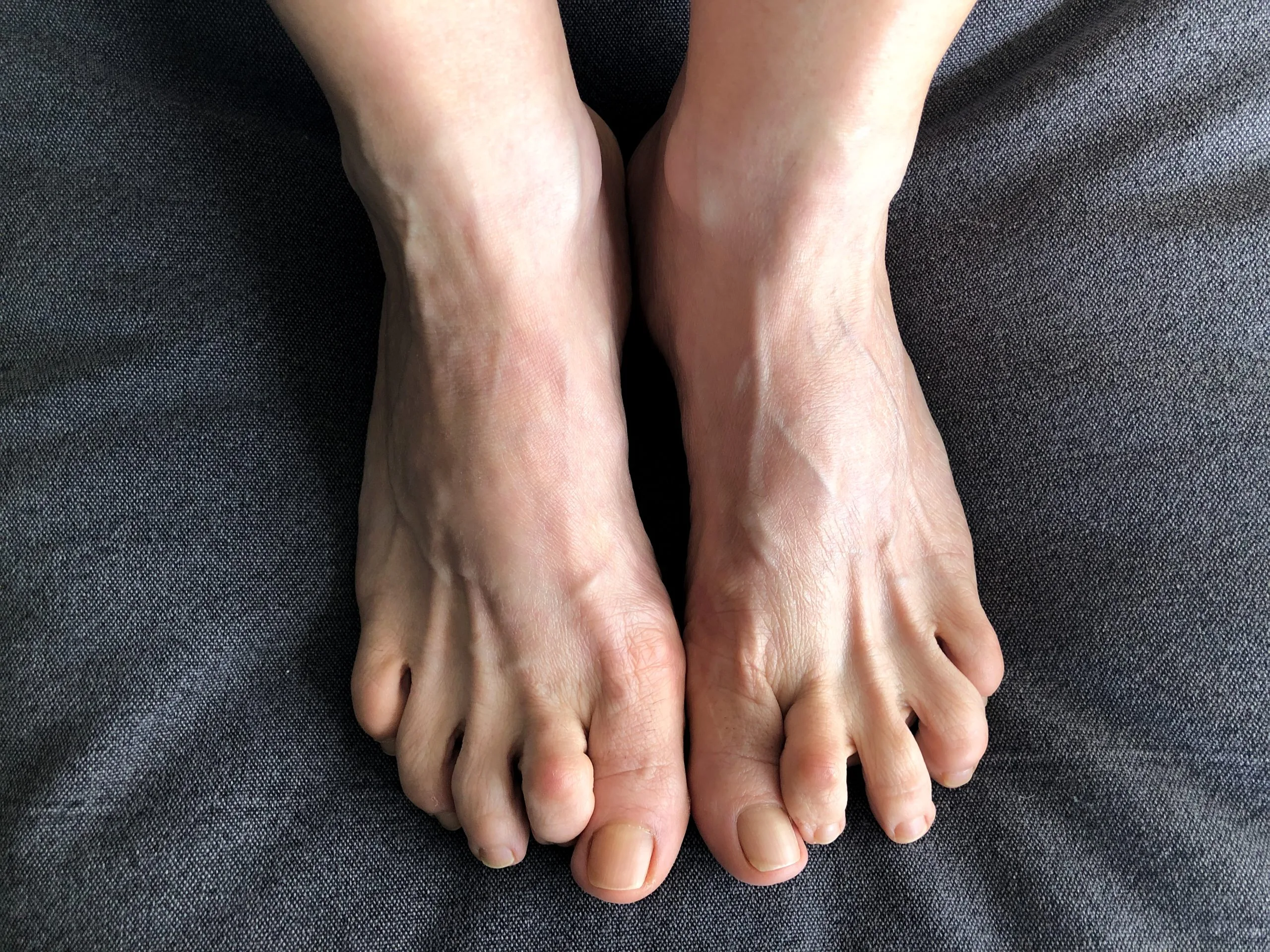
The early signs of hammertoes include a noticeable, slight bending in the middle joint of a toe, mild pain or irritation when wearing shoes, and a feeling that you can’t completely straighten the affected toe. These initial symptoms often appear gradually and may seem minor, but they are important indicators of an underlying imbalance in the toe’s muscles and tendons. Recognizing these signs early is the first step toward preventing the condition from becoming more severe and rigid over time.
A hammertoe is a deformity that causes a toe – most often the second, third, or fourth toe – to bend or curl downward at the middle joint, resembling the shape of a hammer. This condition occurs due to an imbalance in the muscles, tendons, or ligaments that are responsible for keeping the toe straight.
Initially, a hammertoe is flexible, meaning the affected joint can still be moved and straightened manually. However, if left unaddressed, the tendons can tighten, and the joint can become stiff, leading to a “rigid” hammertoe. At this stage, the toe is fixed in its bent position and can no longer be straightened, often causing significant pain and difficulty with footwear. This progression underscores the importance of early detection and intervention. The bending of the toe can also create pressure points, leading to secondary issues like corns and calluses where the toe rubs against the inside of your shoes.
Catching a hammertoe in its early, flexible stage provides the opportunity for effective, non-invasive management. Many people dismiss the initial symptoms as minor annoyances, but paying attention to them is crucial.
The most obvious early sign is a visible change in the toe’s posture. This doesn’t happen suddenly but develops over time.
Slight Bending: You may notice that one of your toes, usually the one next to the big toe, doesn’t lie completely flat anymore. It may have a slight, constant bend in the middle joint (the proximal interphalangeal joint, or PIP joint). At first, this bend might only be apparent when you’re standing or wearing shoes, but it will eventually be present even when you’re at rest.
Flexible vs. Rigid: In the early stages, this bend is “flexible.” This means you can still physically press on the toe and straighten it out. You might also be able to flex and straighten it with your own muscles, although it might feel a little stiff. As the condition progresses without intervention, the tendons and joint capsule tighten, and the deformity becomes “rigid,” meaning you can no longer manually straighten the toe. The transition from flexible to rigid is a critical reason why early diagnosis is so important.
Pain is a common signal that something is wrong. With an early-stage hammertoe, the pain is often directly related to pressure.
Pain on Top of the Toe: The bent position causes the top of the middle joint to sit higher than the other toes. When you wear shoes, especially closed-toe styles, this raised joint constantly rubs against the inside of the shoe. This friction and pressure can cause a dull ache or even sharp pain.
Pain at the Tip of the Toe: Because the toe is curled downward, the tip of the toe can be forced against the sole of the shoe. This can cause pain in the toenail or the pad at the end of the toe, and it may feel like there’s a pebble in your shoe.
Pain in the Ball of the Foot: The hammertoe deformity can change the way your foot bears weight. The altered mechanics can lead to increased pressure and pain in the ball of the foot, just behind the affected toe. This condition, known as metatarsalgia, often accompanies hammertoes.
Inflammation is your body’s response to irritation or injury. With a hammertoe, this often manifests as localized swelling and redness.
Inflammation at the Joint: The constant rubbing and pressure on the top of the bent toe joint can irritate the skin and the underlying soft tissues, causing them to become red, swollen, and warm to the touch. This can be particularly noticeable after a long day of walking or wearing tight shoes.
Bursitis: In some cases, a small, fluid-filled sac called a bursa can develop over the joint to try to cushion it from pressure. If this bursa becomes inflamed (a condition called bursitis), it can cause significant swelling and pain.
An early but subtle sign of a developing hammertoe is a change in the toe’s range of motion.
Difficulty Straightening the Toe: You might find it increasingly difficult to wiggle or straighten the affected toe. While you can still physically push it flat, trying to extend it using just your toe muscles becomes a challenge. This indicates that the muscle and tendon imbalance has already begun.
Stiffness: The toe may feel stiff, especially in the morning or after periods of inactivity. This stiffness is a sign that the joint and surrounding tissues are starting to adapt to the bent position and lose their natural flexibility.
Your skin’s natural defense against friction and pressure is to thicken. The formation of corns and calluses is a direct result of the abnormal posture of a hammertoe.
Corn on Top of the Joint: The most common location for a corn is on the top of the bent middle joint. This hard, painful bump of skin forms precisely where the toe rubs against the shoe.
Callus at the Tip of the Toe: A callus (a wider area of thickened skin) may form on the tip of the toe where it presses into the ground or the shoe’s insole.
Callus on the Ball of the Foot: As mentioned earlier, the change in weight distribution can also cause calluses to form on the ball of the foot beneath the affected toe.
These hardened areas of skin are not just a cosmetic issue; they can become very painful and are a clear indicator that your toe is experiencing abnormal pressure due to its position.
You should consider making an appointment with a foot specialist if you notice any of the early signs mentioned above, even if the pain is mild. It’s a common misconception to wait until a problem becomes unbearable before seeking help.
Specifically, it’s time to see a specialist at Revive Hand and Foot Institute if:
You see a visible, persistent bend in one of your toes.
You experience pain in your toe, forefoot, or ball of the foot that interferes with your daily activities or choice of footwear.
You develop painful corns or calluses that keep returning despite home care.
You find it difficult to find shoes that fit comfortably due to the shape of your toe.
The toe is becoming stiff, and you can no longer straighten it easily.
An early consultation allows a specialist to accurately diagnose the issue, determine if the hammertoe is still in its flexible stage, and recommend a personalized plan to manage symptoms and prevent progression.
Once a hammertoe begins to form, the goal is to keep it flexible and prevent it from becoming rigid and more painful. Our specialists focus on conservative strategies to manage the condition in its early stages.
Proper Footwear: The single most important step is to change your footwear. Choose shoes with a wide, deep toe box that provides ample room for your toes to lie flat. Avoid high heels (over two inches) and narrow, pointed shoes that cramp your toes.
Stretching and Exercises: Gentle stretching exercises can help keep the toe joint flexible. You can manually pull the toe to stretch the tightened tendons. Picking up small objects like a marble or a towel with your toes can also help strengthen the intrinsic foot muscles.
Padding and Taping: Over-the-counter pads can be placed over the prominent joint to cushion it and reduce friction inside shoes. Our specialist may also show you how to use medical tape to hold the toe in a straighter position, which can help alleviate pressure and retrain the surrounding tissues.
Custom Orthotics: Our specialist can create custom orthotic inserts for your shoes. These devices are designed to help correct muscle and tendon imbalances, provide support for the arch, and redistribute pressure away from the affected toe.
When you visit Revive Hand and Foot Institute for a foot concern, the process begins with a thorough evaluation. A specialist will examine your foot, assess the toe’s flexibility, and check for signs of redness, swelling, or corns. They will ask about your symptoms, lifestyle, and the types of shoes you typically wear.
In most cases, a physical examination is sufficient to diagnose a hammertoe. However, an X-ray may be ordered to assess the severity of the joint deformity and check for underlying conditions like arthritis.
Based on this comprehensive diagnosis, our team will discuss your options. For early, flexible hammertoes, the focus will be on the conservative prevention strategies listed above. If the deformity is rigid, painful, and significantly impacting your quality of life, more advanced options may be considered. Our practice provides a full spectrum of care to realign the toe and relieve pain when conservative measures are no longer effective.
A hammertoe starts with subtle changes that are easy to ignore, but these early signs are your body’s way of signaling an impending problem. A slight bend in the toe, mild discomfort in shoes, and the formation of a corn are not just minor inconveniences; they are opportunities for early intervention. By recognizing these symptoms and taking proactive steps – like choosing better footwear and seeking a professional evaluation – you can manage the condition effectively and prevent it from progressing to a more painful, rigid state.
If you notice any of these changes in your feet, our team at Revive Hand and Foot Institute is here to provide a clear diagnosis and guide you toward the right solution for your needs.

About the Author
Dr. Morad Askari, MD, MBA, FACS
July 28, 2026